


Military families learn how to move with remarkable efficiency.
Documents stay close. Deadlines matter. Household goods are tracked. Children are enrolled. Medical records are transferred. The family learns how to arrive, establish a routine, and make a temporary address feel like home—sometimes before everyone has memorized the route to the grocery store.
Then comes a move with no orders attached.
For the first time in years, perhaps ever, the address is not being assigned. There is no report date determining when the decision must be finished. The household can choose the county, community, property, and length of stay.
That freedom can be exhilarating.
It can also create a different kind of pressure.
After years of temporary housing or duty-driven decisions, the first civilian purchase may be expected to become everything at once: the retirement home, the family gathering place, the financial investment, the reward for years of service and the permanent answer to a lifetime of moving.
Anderson County can make that vision especially compelling. A buyer may find an established city neighborhood, a growing suburban community, a quieter country property, or a home near Lake Hartwell. Each offers a different version of the Upstate life.
But a permanent address deserves a different process from a PCS move.
Military readiness teaches families how to act quickly. Civilian homeownership sometimes requires the opposite skill: slowing down long enough to verify what the property, financing, and location will ask of the family after the excitement of choosing is over.
The First Freely Chosen Home Does Not Have to Be the Forever Home
The phrase “forever home” can place enormous emotional weight on a purchase.
A veteran family may feel that after years of moves, it should finally choose one property that works for every future season:
- Current employment
- Retirement
- Children at home
- Adult children returning
- Grandchildren visiting
- Aging
- Caregiving
- Disability
- Travel
- Family inheritance
Few houses can answer every possible future need.
A better goal is to select a property that:
- Works for the household now
- Supports the reasonably foreseeable future
- Fits the budget without consuming every resource
- Preserves options
- Can be maintained
- Allows the family to participate in the community
- Does not depend on unverified assumptions
Permanent does not have to mean perfect. It means the decision belongs to you and deserves to be made on your terms.

Replace PCS Urgency With Civilian Due Diligence
Military moves often reward speed, adaptability and decisive action.
Homebuying rewards a different set of behaviors:
- Asking the same question more than once
- Comparing documents
- Waiting for written answers
- Investigating boundaries
- Hiring independent professionals
- Studying long-term costs
- Walking away when critical information remains unresolved
A listing may create urgency with multiple offers, short deadlines or language suggesting a rare opportunity.
The property may genuinely be competitive. That does not make its well, septic system, roof, title, utility access or flood exposure less important.
A veteran family should not confuse the ability to tolerate difficult conditions with a reason to purchase them.
You may be capable of solving almost any property problem. The real question is whether you want your next chapter to require it.
Understand What a VA-Backed Loan Does—and What It Does Not Do
A VA-backed home loan can be a valuable earned benefit for eligible borrowers. But several parts of the process are frequently blended together.
They should be understood separately.
Eligibility
The Department of Veterans Affairs determines whether service requirements and other conditions support eligibility for a VA-backed loan benefit. A Certificate of Eligibility helps establish that status.
Eligibility does not guarantee that every lender will approve the borrower or that every property will meet applicable requirements.
Lender Approval
A lender evaluates factors such as income, credit, debts and ability to repay under its underwriting process and applicable VA requirements.
Speak with more than one appropriately qualified lender when possible. Compare the complete loan offer—not merely an advertised rate.
VA Appraisal
The appraisal addresses value and applicable minimum property requirements for the VA loan process.
The VA explicitly states that an appraisal is not the same as a home inspection. Its home-loan guidance recommends that buyers obtain an inspection before purchasing. Veterans Affairs
Independent Home Inspection
An independent inspector evaluates the home’s visible systems and condition within the scope of the inspection agreement.
Depending on the property, additional specialists may be appropriate for:
- Septic
- Well
- Roof
- HVAC
- Electrical systems
- Plumbing
- Structural conditions
- Moisture or drainage
- Chimney
- Pool
- Dock
- Pests
- Environmental concerns
Title and Closing Review
The closing attorney and other qualified professionals address legal documents, title matters, and the transaction within their respective roles.
None of these steps replaces all the others.
A passing appraisal does not promise a trouble-free house. A general home inspection does not establish legal shoreline rights. A lender’s approval does not prove the monthly payment supports the family’s broader life.

Build a Financing Team That Respects the Benefit
Veterans may encounter marketing that treats a VA loan like a guaranteed path to homeownership or assumes every veteran borrower has identical needs.
Choose professionals who can explain:
- Available loan options
- Complete estimated costs
- Funding-fee questions and possible exemptions
- Cash required at closing
- Seller concessions
- Interest-rate structure
- Discount points
- Closing timeline
- Appraisal process
- Property requirements
- Repair issues
- Occupancy requirements
- Refinancing claims
- What happens if the appraisal is below the contract price
Ask a lender:
- How much of your work involves VA-backed loans?
- Who handles VA-specific questions?
- Which charges can change?
- What assumptions are included in this estimate?
- How long is the rate locked?
- What happens if closing is delayed?
- How will you communicate with the closing attorney and agent?
- Can you explain the difference between what I qualify to borrow and what may be comfortable to repay?
The largest approved payment is not automatically the correct housing budget.
Anderson County Offers Several Different Civilian Lifestyles
An Anderson address can support very different daily routines.
Anderson’s Urban Area
A home closer to Anderson’s established urban services may provide convenient access to shopping, healthcare, government offices, employment, and community activities.
Verify whether the property is legally inside the City of Anderson and which services accompany that jurisdiction.
Suburban and Growing Communities
Properties outside the urban center may offer newer housing, subdivisions, access to regional routes, and additional space.
Investigate traffic, school assignments, HOA responsibilities, development plans, and the exact providers serving the home.
Lake Hartwell Area
Lake-area living may offer water access, views, boating and an atmosphere that feels like a long-awaited reward.
It may also introduce shoreline permits, dock responsibilities, slopes, private roads, wells, septic systems and longer drives.
Related reading: The Lake-Life Dream After 55: What to Consider Before Buying Near Lake Hartwell
Rural Anderson County
A larger lot can provide privacy, workshops, animals, gardens, or room for multigenerational plans.
It can also involve:
- Private water or wastewater systems
- Propane
- Limited broadband choices
- Longer emergency-response routes
- Private-road responsibilities
- Easements
- Additional land maintenance
- Greater distance from healthcare and employment
The correct setting depends on what the household wants daily life to feel like—not simply which home photographs best.
Verify the Exact Address Before Falling in Love With the Lifestyle
Mailing addresses do not define every service or legal boundary.
For each property, confirm:
- County and municipality
- Tax-map number
- Recorded owner
- Legal description
- Zoning or applicable land-use information
- Building and permit records when available
- Emergency address
- Water source
- Wastewater system
- Electricity provider
- Natural gas or propane
- Garbage arrangements
- Broadband
- Road ownership and maintenance
- HOA or restrictive covenants
- Easements
- Flood information
- Shoreline rights, when applicable
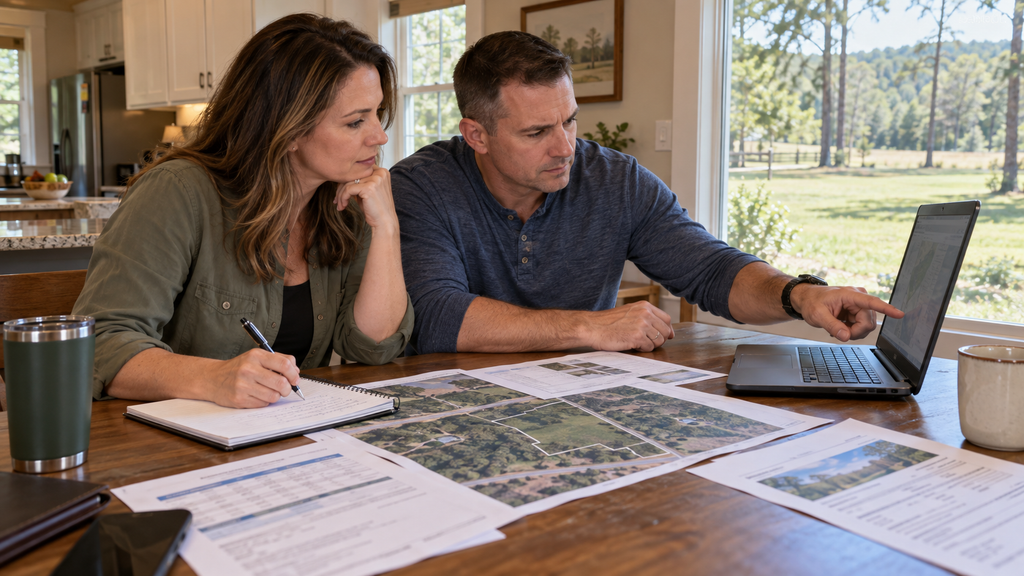
Anderson County’s GIS and E911 Addressing Department maintains county geographic and address information, while the Assessor’s Office classifies, maps, and appraises real property. The Register of Deeds records and maintains documents establishing property ownership. Each office serves a different purpose; no single online record should be expected to answer every property question. Anderson County South Carolina
Create a property-verification file and save the source, date, and contact associated with each answer.
Public Water Does Not Automatically Mean Public Sewer
This distinction deserves special attention in Anderson County.
A property may have:
- Public water and public sewer
- Public water and septic
- A private well and septic
- A community system
- A connection available nearby but not installed at the property
Anderson County advises residents to confirm sewer availability using the 911 address, subdivision and lot information, and tax-map number. The County Wastewater Department manages permits and inspections within its service responsibilities. andersoncountysc.org
Ask:
- Is the house physically connected?
- Who owns the collection system?
- Who sends the bill?
- Is a tap installed?
- Are capacity, connection or extension costs outstanding?
- Does the property use septic?
- Where are the tank and drain field?
- Is a replacement area available?
- Do additions and bedrooms match the permitted system?
For a well, investigate location, construction records, water pressure, pump condition, treatment equipment, and water-quality testing.
For a septic system, obtain available permits and arrange an appropriate inspection. Do not assume a general home inspection includes a complete septic evaluation.
Rural, Lake and Acreage Properties Need an Expanded Inspection Plan
A veteran may be drawn to a property with room for a workshop, recreational equipment, visiting family, or the quiet that was difficult to find during military life.
That space can be deeply rewarding. It also moves more responsibility to the owner.
Depending on the property, evaluate:
- Private roads
- Shared driveways
- Utility easements
- Drainage
- Retaining walls
- Tree condition
- Outbuildings
- Unpermitted improvements
- Wells
- Septic systems
- Propane tanks
- Fences
- Culverts
- Docks
- Shoreline permits
- Internet installation
- Cell reception
- Equipment access
- Distance for emergency and maintenance services
Ask who currently maintains each feature, how often, and at what approximate cost.
A seller’s statement that neighbors “take care of the road together” needs supporting documentation. A propane tank beside the home may be owned or leased. An attractive workshop may not have permits or utility capacity for its intended use.
Verify before taking responsibility.

Inspect the Home for the Veteran’s Actual Needs
A property can meet general financing requirements and still be a poor fit for a service-connected disability, injury or long-term health need.
Evaluate:
- Steps at entrances
- Main-level bedroom and bathroom
- Door and hallway width
- Flooring transitions
- Shower or tub access
- Kitchen usability
- Parking-to-entry distance
- Lighting
- Noise
- Space for mobility equipment
- Medication storage
- Service-animal needs
- Room for a caregiver
- Distance to appropriate healthcare
- Backup power for medical equipment
- Internet for telehealth
- Yard and exterior maintenance
Do not focus only on current mobility. Consider pain, fatigue, hearing, vision, sleep, and other conditions that may influence how the home feels.
The veteran should be centered in this assessment without carrying the entire burden of identifying every future need. A qualified occupational therapist, accessibility specialist, medical professional, or appropriately experienced contractor may help evaluate property-specific concerns.
The Family’s Needs Belong in the Purchase Decision
After years in which the military mission influenced housing and location, civilian home selection can unintentionally remain centered on the veteran alone.
The spouse and children need separate questions.
For the Spouse
- Where will they work?
- Is professional licensing required?
- Is childcare available?
- What commute will they have?
- Can they pursue education?
- Will the property make them more isolated?
- What community connections matter to them?
- Does the purchase leave financial room for their goals?
For Children
- Which school serves the exact address?
- How will transportation work?
- Can they continue activities they value?
- Are they expecting this to be permanent?
- How do they feel about another transition?
- Will the location make friendships and participation easier?
- What support might they need after the move?
For Caregivers or Extended Family
- Will anyone live with the household?
- Is a separate or flexible space needed?
- Can relatives visit comfortably?
- Is the home accessible?
- Who will provide transportation?
- How far away is appropriate healthcare?
- Are family members close enough to help realistically?
The first permanent address should give the entire household room to establish civilian identities.

Compare the Complete Monthly Life—not Just the Mortgage
Military households may be accustomed to thinking in terms of housing allowance, provided services, or predictable installation access.
Civilian ownership rearranges the calculation.
Estimate:
- Principal and interest
- Property taxes
- Homeowners insurance
- Flood or other property-specific coverage
- HOA fees
- Electricity
- Water and wastewater
- Well and septic maintenance
- Trash service
- Internet
- Propane or natural gas
- Landscaping
- Repairs
- Pest treatment
- Transportation
- Commuting
- Healthcare travel
- Accessibility modifications
- Dock or boat expenses
- Emergency savings
- Replacement of major systems
A lower purchase price farther from Anderson may come with more driving and private-system responsibility. A smaller home in a managed community may have higher monthly fees but less exterior work.
The correct comparison is the whole life attached to the address.
Treat Veteran Property-Tax Benefits as a Verification Process
South Carolina provides property-tax exemptions for certain qualifying veterans and, in some circumstances, surviving spouses. Eligibility depends on specific statutory and administrative requirements.
Do not subtract a potential exemption from the household budget until eligibility, the covered property, and the effective timing have been confirmed through official agencies.
The South Carolina Department of Veterans’ Affairs and Department of Revenue publish current guidance on qualifying veteran property-tax exemptions. Anderson County also provides local information, but the responsible offices should verify how the rules apply to an individual household. scdva.sc.gov
Ask:
- Which agency determines eligibility?
- Which documents are required?
- Is the exemption automatic?
- When should the application be submitted?
- Which tax year will it affect?
- What land, residence or vehicles are covered?
- Does the exemption transfer automatically to a new property?
- What rules apply to a surviving spouse?
- Who confirms the exemption on the local tax record?
Keep copies of every determination.
A real-estate agent, seller or lender may identify a possible benefit, but the appropriate government agency must confirm it.
Confirm Healthcare Access From the Address
The Anderson VA Clinic provides outpatient services, including primary care and certain specialty and support services. Veterans should consult the clinic’s current official information and their VA care team to confirm which services are available locally, which require referrals and where other care will occur. Anderson County
Test routes from the prospective home to:
- VA care
- Community healthcare
- Emergency care
- Pharmacy
- Rehabilitation
- Specialty care
- Counseling
- Caregiver support
A twenty-minute distance on a map may feel different at the appointment time, on a rural road, or when someone else must provide transportation.
Healthcare access is not simply whether a facility exists in the county. It is whether the appropriate care can be reached reliably from the exact home.
Decide Whether Buying Now Is Actually the Mission
Years of temporary assignments can create a strong desire to own immediately.
But renting first is not a failure to commit.
It may be useful when:
- Civilian employment is new
- A spouse’s work location remains uncertain
- The family does not know Anderson County well
- Healthcare routines are still being established
- The household is comparing Anderson with Greenville or Spartanburg
- Children’s needs are changing
- The buyer is unsure between city, lake, suburban and rural living
- The eventual purchase depends on selling another property
- The desired home requires more investigation than the timeline allows
Related reading: Rent First, Learn the City: When a One-Year Lease Can Be a Smart Upstate Relocation Strategy
A rent-first period should have a purpose, budget, and decision timeline. It is not postponement for its own sake. It is reconnaissance for a decision you finally control.
Build the Permanent Address Verification File
Create one folder—digital, physical, or both—with these sections:
1. Eligibility and Financing
- Certificate of Eligibility
- Loan estimates
- Funding-fee information
- Preapproval
- Lender contacts
- Closing-cost estimates
- Rate-lock information
2. Property Identity
- Address
- Tax-map number
- Legal description
- Assessor information
- Recorded documents
- Survey
- Municipal status
- Zoning and permits
3. Inspection and Condition
- General inspection
- Specialist reports
- Repair estimates
- Seller disclosures
- Warranty information
- Photographs
- Contractor evaluations
4. Utilities and Infrastructure
- Electricity
- Water
- Wastewater or septic
- Well
- Gas or propane
- Trash
- Internet
- Road maintenance
- Easements
5. Veteran and Family Considerations
- Healthcare routes
- Accessibility
- Spouse employment
- School and childcare
- Caregiver needs
- Community support
- Benefits contacts
6. Complete Monthly Cost
- Housing payment
- Taxes
- Insurance
- Utilities
- Association fees
- Maintenance
- Transportation
- Healthcare travel
- Emergency reserves
7. Unresolved Questions
Every unanswered question stays on this page until it is resolved, accepted as a known risk, or becomes a reason to walk away.
The Right Permanent Address Is Chosen, Not Assigned
The first permanent home after service does not need to carry the weight of every move that came before it.
It does not need to prove that the sacrifices were worthwhile or become a flawless reward for years of uncertainty.
It needs to support the people your family has become.
That may be a home near Anderson’s services, a neighborhood with room for children, a quiet country property or a place near Lake Hartwell where family can gather. The right answer may even be a rental while the household learns what civilian life will require.
What makes the address different is not simply how long you remain there.
It is that the decision is informed, deliberate, and yours.

Your Next Step
Before making an offer, create the seven-section Permanent Address Verification File.
Do not allow approval for a loan, enthusiasm for a view or pressure from a deadline to substitute for property-specific research.
Verify the financing, inspect the home, confirm the services, calculate the complete cost, and ask every member of the household what they need the address to support.
This time, readiness includes permission to slow down.
Finding Your Place
Finding your place is about more than choosing an address. It is about understanding how you want to live, what matters most to you, and which community gives that life room to grow.
Editorial Production Note
This story was developed by the Greenville Upstate Life Media Editorial Team with assistance from Marcus Ramirez, our AI-assisted military, veterans and practical-planning editorial persona, and Georgia Wren, our AI-assisted relocation and community-integration editorial persona. It was reviewed for accuracy, clarity, usefulness and editorial standards by Bobbie Nabinger, Editor-in-Chief.
AI Image Disclosure
Unless otherwise identified or credited, the images accompanying this article are AI-assisted editorial illustrations created for Greenville Upstate Life Media to represent the setting, atmosphere and themes of the featured story. They are not documentary photographs of the actual people, businesses, organizations, locations, events or activities described.
Sources and Further Reading
- VA: Buying a Home With a VA-Backed Loan
- VA Home Loan Program
- VA Home Loan Toolkit
- Anderson County Veterans Affairs
- South Carolina Department of Veterans’ Affairs
- SCDVA Veteran Consumer Resources
- South Carolina Department of Revenue: Property-Tax Information for Veterans
- Anderson County Auditor and Tax Information
- Anderson County Assessor and Real Property
- Anderson County Register of Deeds
- Anderson County GIS and E911 Addressing
- Anderson County Building and Codes
- Anderson County Wastewater
- South Carolina DES: Septic Systems
- South Carolina DES: Residential Well-Water Testing
- Anderson VA Clinic
- U.S. Army Corps of Engineers: Lake Hartwell Shoreline Management
This article provides general relocation, housing and veterans-resource information. It is not legal, financial, tax, lending, insurance, medical, appraisal, inspection, real-estate or veterans-benefits advice. Eligibility, loan terms, exemptions, property conditions, permits and services must be confirmed for the individual and exact property through the responsible agencies and appropriately qualified professionals.