


For years, the next move may have arrived as a set of instructions.
The destination was not always your first choice, but the process had a recognizable structure. There were reporting dates, checklists, offices, healthcare systems, identification requirements and people who understood the language of military life without needing it translated.
Then the orders end.
The move to Greenville may be the first one driven entirely by your household’s own decision. You can choose the community, the home and the timing—or at least more of them than military life allowed.
That freedom can feel wonderful.
It can also feel surprisingly disorienting.
There is no installation gate marking the center of your new support system. Healthcare, benefits assistance, employment services, schools, counseling, family resources and community life may exist across several organizations. The people who can help may not know one another, and the first office you contact may not be the office that handles your particular need.
This does not mean veteran families are unsupported in the Upstate. It means the support system often has to be assembled intentionally.
The most useful question is not simply:
What veteran resources are available in Greenville?
It is:
Who belongs on our family’s civilian support team, and how will we reach them before a problem becomes urgent?
Military Structure Does Not Disappear From Your Life All at Once
The end of active service, retirement or separation is often described as a clean transition from military life into civilian life.
For most households, it is not that simple.
Military experience may continue shaping:
- How the family responds to uncertainty
- How quickly it makes decisions
- How responsibilities are divided
- How children react to another move
- How the veteran understands work and purpose
- How a spouse approaches career planning
- How the household asks for help
- Which traditions feel important
- How deeply everyone misses people who understood the lifestyle
The uniform may come off on a particular date. The family’s transition continues afterward.
Some needs will be practical: transferring healthcare, filing claims, finding employment or determining which benefits apply.
Others will be quieter:
- Missing the clarity of a mission
- Losing daily contact with people who shared the experience
- Feeling uneasy without a defined role
- Discovering that old friendships now live across the country
- Realizing that the spouse’s career needs attention too
- Watching children navigate another beginning without the familiar military community around them
A civilian support system must make room for all of this. It should not be limited to paperwork.
Greenville Is a Community, Not a Replacement Installation
One of the first adjustments is recognizing that Greenville will not function like a military base.
There may be excellent local resources, but they will not necessarily sit inside one coordinated system. A veteran may receive healthcare through the Department of Veterans Affairs, work for a civilian employer, obtain claims assistance through an accredited representative, join a local service organization and rely on a private physician for part of the family’s care.
A spouse may need separate employment assistance, professional licensing guidance and a new personal network. Children may need school support even when they seem highly practiced at being “the new kid.”
The goal is not to find one organization that does everything.
It is to identify dependable people and agencies in several areas, understand what each one actually does and keep that information accessible.

Build Your Civilian Support Team Before You Need Every Member
Start with six areas:
- Healthcare
- Benefits and claims
- Employment and education
- Spouse and family support
- Community and peer connection
- Emergency and crisis support
For each area, identify:
- Primary organization or professional
- Contact information
- Eligibility requirements
- Records you may need
- Appointment or enrollment process
- Backup resource
- Date the information was verified
You may not need every service immediately. Building the list now prevents a stressful situation from becoming a frantic internet search later.
Healthcare: Know Which System Does What
Veteran families may use several healthcare systems:
- VA healthcare
- TRICARE, when eligible
- Employer-sponsored insurance
- Private insurance
- Medicare
- Medicaid, when eligible
- Community providers
- Separate coverage for spouses or children
Do not assume that enrollment in one system automatically arranges every type of care.
Confirm:
- The veteran’s current eligibility and enrollment
- The family’s separate coverage
- Assigned or available primary care
- Prescription-transfer procedures
- Specialty-care access
- Mental-health services
- Dental and vision coverage
- Urgent and emergency-care rules
- Community-care authorization requirements
- Caregiver support
- Required referrals
- Which facilities are realistically accessible from the prospective address
The Lance Corporal Dana Cornell Darnell VA Clinic, formerly known as the Greenville VA Clinic, provides outpatient services that include primary care and several specialty and supportive services. Its current official page should be consulted for available care, address, hours, appointments and eligibility-related guidance. va.gov
The existence of a local clinic does not mean every service is delivered there or that every veteran will follow the same care pathway. Verify what your household needs, which location provides it, and whether referrals or travel may be involved.
Create a healthcare page in your support file containing:
- VA identification and enrollment information
- Insurance cards
- Medication list
- Current providers
- Preferred pharmacy
- Emergency contacts
- Disability or accessibility needs
- Release-of-information documents
- Caregiver contacts
- Nearest appropriate urgent and emergency facilities
Do not wait for an urgent situation to determine how the systems fit together.
Benefits Assistance: Choose Qualified Help, Not the Loudest Promise
Benefits information can become confusing quickly.
A veteran or survivor may encounter websites, advertisements, and businesses promising to increase a rating, accelerate a claim or uncover benefits that others supposedly missed.
Before sharing personal records or paying for help, verify who is providing the assistance.
The Department of Veterans Affairs explains that an accredited Veterans Service Organization representative, attorney or claims agent can assist with filing a claim or requesting a decision review. The VA provides tools for finding and confirming accredited representation. Veterans Affairs
The Greenville County Veterans Affairs Office provides local assistance and maintains information about veterans’ benefits and claims-related resources. The South Carolina Department of Veterans’ Affairs also connects residents with county resources and state and federal benefit information. SC Department Of Veterans’ Affairs
Ask any potential benefits representative:
- Are you currently VA-accredited?
- Which organization or office do you represent?
- Is there a fee?
- What documents do you need?
- How will my private information be protected?
- What will you submit on my behalf?
- How can I verify your credentials independently?
- Will I receive copies of everything filed?
The VA’s fraud-prevention guidance specifically encourages veterans to verify communications through official channels and confirm a representative’s credentials before sharing information or filing a claim. Veterans Benefits Administration
A trustworthy professional should be comfortable with verification.

Employment: Translate the Work, Not Your Worth
A military résumé may be full of experience that civilian employers value:
- Leadership
- Logistics
- Equipment maintenance
- Safety
- Healthcare
- Communications
- Training
- Personnel development
- Cybersecurity
- Inventory control
- Transportation
- Project management
- Emergency response
- Compliance
- Operations
The problem is often not the value of the experience. It is the language used to describe it.
A civilian hiring manager may not understand:
- Military occupational codes
- Unit structure
- Rank-based responsibilities
- Equipment names
- Mission terminology
- The scale of personnel, assets or risk involved
Begin translating each responsibility into four parts:
- The problem or mission
- The action you took
- The measurable result
- The civilian skill demonstrated
For example, “managed motor-pool readiness” may represent preventive maintenance, workforce supervision, inventory control, regulatory compliance, scheduling and operational continuity.
SC Works states that its centers include staff trained to help military job seekers pursue civilian employment. Its Greenville center offers job-seeker services, partner resources, and tools for employment searches. SC Works
The U.S. Department of Labor’s Veterans’ Employment and Training Service also maintains employment and transition resources for veterans, transitioning service members and military spouses. dol.gov
Do not measure a civilian opportunity only by whether the title sounds important.
Compare:
- Compensation
- Health insurance
- Retirement benefits
- Work schedule
- Shift requirements
- Commute
- Physical demands
- Promotion paths
- Training
- Workplace culture
- Family impact
- Whether the role offers a sense of contribution
The first civilian job does not have to define the rest of your working life. It should, however, be evaluated as more than a paycheck.
Military Spouses Need Their Own Transition Plan
A spouse may have spent years rebuilding a career around moves, deployments, childcare, licensing barriers and the service member’s assignments.
When military service ends, people may assume the spouse’s career will naturally stabilize.
It deserves more intentional consideration.
A spouse’s transition plan should address:
- Career goals
- Transferable skills
- Professional licensing
- Education or credentialing
- Résumé gaps
- Remote-work possibilities
- Childcare
- Transportation
- Healthcare
- Retirement savings
- Networking
- Entrepreneurship
- The emotional adjustment from supporting the military mission to defining a more independent one
The Department of Labor maintains military-spouse employment resources and employment-training workshops designed around the circumstances of military spouses and caregivers. dol.gov
A spouse should not be expected to absorb every remaining household transition task while simultaneously rebuilding a career.
Include both adults’ employment, education, and purpose in the relocation plan from the beginning.
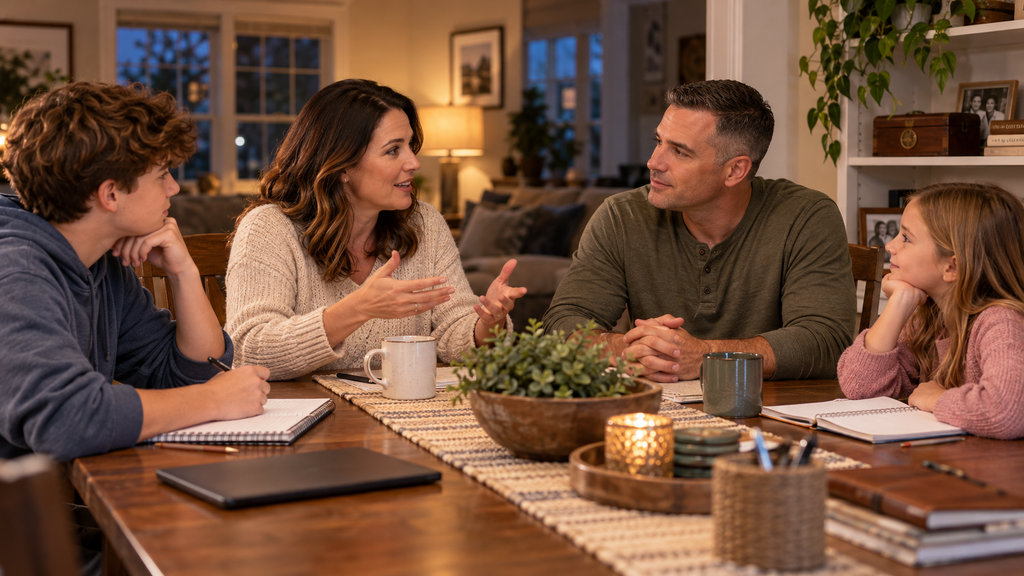
Children May Be Experienced Movers and Still Need Support
Military-connected children are often praised for resilience.
They may be skilled at entering a new school, answering questions about where they are from, and staying connected with friends at a distance.
But experience with moving does not make every move emotionally easy.
The transition into permanent civilian life can introduce new questions:
- Is this finally home?
- Will we move again?
- Why do other families have lifelong local friendships?
- How do I explain our family’s military experience?
- What happens to traditions tied to the installation?
- Why is my parent acting differently after leaving service?
- Where do I fit if there is no visible military community?
Parents can support the transition by:
- Telling children what is known and unknown
- Avoiding promises about permanence that cannot be guaranteed
- Identifying school contacts before enrollment
- Preserving meaningful family traditions
- Helping children maintain selected long-distance friendships
- Encouraging recurring local activities
- Watching for delayed reactions after the logistical move is complete
- Seeking appropriately qualified support when concerns persist
The entire family served through the rhythm of military life. The entire family deserves support while building what comes next.

Caregivers Need a Place on the Support Map
Some veteran families include a spouse, parent, adult child, or friend providing substantial care.
Caregiving may involve:
- Transportation
- Medication management
- Household tasks
- Appointment coordination
- Personal care
- Emotional support
- Benefits paperwork
- Supervision
- Advocacy
- Emergency planning
The caregiver can become so focused on maintaining the veteran’s stability that their own health, employment, and relationships gradually disappear from the plan.
The VA operates caregiver-support programs with different eligibility requirements and services. Its official resources explain that the Program of Comprehensive Assistance for Family Caregivers involves a joint application and eligibility process, while other caregivers may qualify for resources through the Program of General Caregiver Support Services. Veterans Affairs
Caregivers should identify:
- Local VA caregiver-support contact
- Primary medical contacts
- Backup caregiver
- Emergency plan
- Respite possibilities
- Benefits assistance
- Legal documents
- Transportation
- Personal healthcare
- Peer support
- Someone they can call without first explaining the entire situation
Support for the caregiver is part of support for the veteran.
Mental Health Support Does Not Have to Begin With a Crisis
Military transition can affect identity, sleep, relationships, mood, concentration, and a person’s sense of direction.
Seeking support does not mean the transition has failed. It may be one of the most effective ways to protect the next chapter.
The Greenville Vet Center offers confidential counseling and connection to additional services for eligible veterans, service members, and families in a nonmedical setting. Its services include support involving readjustment, depression, post-traumatic stress, and the psychological effects of military sexual trauma. Eligibility and services should be confirmed directly. Veterans Affairs
Support might include:
- Individual counseling
- Family or couples counseling
- Peer support
- Spiritual care
- Substance-use treatment
- Grief support
- Clinical mental-health treatment
- Community groups
- Recreation
- Help navigating employment and identity changes
The correct starting point depends on the person.
If Help Is Needed Immediately
Veterans, service members—including members of the National Guard and Reserve—and their loved ones can contact the Veterans Crisis Line by:
- Dialing 988, then pressing 1
- Texting 838255
- Using the online chat at VeteransCrisisLine.net
The service provides free, confidential support. If there is immediate physical danger, call 911. Veterans Crisis Line
Keep this information in the family’s support file even if you never expect to use it.
Community Connection Cannot Be Reduced to a Resource Directory
A benefits office can help with a claim. A clinic can provide care. An employment center can assist with a job search.
None automatically creates belonging.
Veteran families also need places where they can:
- Be known beyond military status
- Continue traditions they value
- Serve alongside other people
- Build friendships
- Find mentors
- Support other veterans
- Participate in faith or community life
- Reconnect with recreation
- Develop interests that were postponed
- Contribute experience without being defined entirely by it
Potential entry points may include:
- Veteran service organizations
- Faith communities
- Volunteer organizations
- Recreational groups
- Business associations
- Educational programs
- Parent groups
- Neighborhood organizations
- Arts and cultural activities
- Veteran-owned business networks
- Mentoring
- Civic boards and committees
A veteran may want a strong peer connection with other veterans. Another may prefer to build relationships around work, family, faith, art, or outdoor interests.
Both are legitimate.
The objective is not to remain permanently inside a military-only identity or to leave it behind completely. It is to decide how that identity fits into the fuller life being built.

Watch for the Difference Between Privacy and Isolation
Many veterans value independence and may resist asking for assistance.
There is a meaningful difference between:
- Choosing privacy
- Handling what you can
- Wanting quiet
- Needing time to adjust
and:
- Having no one to call
- Avoiding every point of connection
- Carrying problems alone because explaining them feels difficult
- Allowing paperwork or healthcare needs to remain unresolved
- Losing contact with activities that provide purpose
- Believing support must be earned through crisis
A civilian support system should be built while things are relatively stable.
That way, reaching out later means calling someone already identified—not admitting defeat to a stranger.
Create One Verified Contact in Each Support Area
Your support team does not need dozens of names.
Begin with one dependable contact in each category:
| Support area | Contact to identify | What to verify |
|---|---|---|
| Healthcare | VA or appropriate healthcare coordinator | Enrollment, appointments and service locations |
| Benefits | Accredited representative or county veterans office | Accreditation, services, documents and fees |
| Employment | Veteran employment specialist | Eligibility, appointments and available assistance |
| Spouse career | Military-spouse employment resource | Training, licensing and job-search support |
| Family | School, counselor or family-support contact | Services, confidentiality and availability |
| Caregiver | VA or community caregiver coordinator | Eligibility, resources and backup planning |
| Community | Recurring group or organization | Meeting schedule, membership and accessibility |
| Emergency | Crisis and emergency contacts | Correct numbers and when to use them |
Record the date each contact was confirmed.
Programs, staff, office locations and eligibility rules can change. A support file should be treated as a living document, not a one-time checklist.
The Support Team Should Fit the Address You Are Considering
A Greenville mailing address can cover very different locations and travel patterns.
Before choosing a permanent home, test the actual routes to:
- VA healthcare
- Private healthcare
- Employment
- Children’s schools
- Benefits assistance
- Family members
- Counseling
- Faith community
- Veteran organizations
- Education or training
- Childcare
- Emergency care
Consider whether both adults can reach their responsibilities without creating an exhausting household schedule.
If you are unsure where the family should settle, renting first may allow time to understand the region before purchasing.
Related reading:
- Rent First, Learn the City: When a One-Year Lease Can Be a Smart Upstate Relocation Strategy
- A Greenville Mailing Address Doesn’t Always Mean Greenville City
- The Utility Map Is Not the City Map
A chosen address should support the family’s civilian life—not merely satisfy a housing search.
The Family Served Too
The service member may have worn the uniform, but military life shaped the entire household.
Spouses adjusted careers. Children changed schools. Caregivers carried responsibilities that were rarely visible. Parents worried from a distance. Families learned to celebrate, grieve, plan, and recover around demands they did not control.
Civilian transition should not ask them to become invisible.
When building your Greenville support system, give every member of the household space to answer:
- What did military life ask of me?
- What part of it do I want to keep?
- What am I relieved to leave behind?
- What support do I need now?
- What would help this place begin to feel like home?
- What do I want my own next chapter to include?
Those answers may not match. That is not a problem to eliminate. It is information the family needs.

Your Next Step: Build the First Page of Your Civilian Support File
Create one page divided into six sections:
- Healthcare
- Benefits
- Employment and education
- Spouse, children and caregiver support
- Community connection
- Emergency assistance
Add at least one verified contact to each section.
You do not have to call every organization today. Begin by confirming which resources apply, what documentation they require and how to reach them.
Then share the file with the appropriate adult members of the household. A support system is strongest when its information does not live inside only one person’s phone.
Finding Your Place
Finding your place is about more than choosing an address. It is about understanding how you want to live, what matters most to you, and which community gives that life room to grow.
Editorial Production Note
This story was developed by the Greenville Upstate Life Media Editorial Team with assistance from Marcus Ramirez, our AI-assisted military, veterans and practical-planning editorial persona, and Georgia Wren, our AI-assisted relocation and community-integration editorial persona. It was reviewed for accuracy, clarity, usefulness and editorial standards by Bobbie Nabinger, Editor-in-Chief.
AI Image Disclosure
Unless otherwise identified or credited, the images accompanying this article are AI-assisted editorial illustrations created for Greenville Upstate Life Media to represent the setting, atmosphere and themes of the featured story. They are not documentary photographs of the actual people, businesses, organizations, locations, events or activities described.
Sources and Further Reading
- U.S. Department of Veterans Affairs
- Lance Corporal Dana Cornell Darnell VA Clinic
- Greenville Vet Center
- Greenville County Veterans Affairs
- Greenville County Veterans Benefits Information
- South Carolina Department of Veterans’ Affairs
- South Carolina Department of Veterans’ Affairs: County Resources
- VA: Find an Accredited Representative
- VA Accreditation Search
- VA Fraud Prevention
- VA Family and Caregiver Benefits
- VA Caregiver Support Program
- SC Works Veteran Services
- SC Works Greenville
- U.S. Department of Labor Veterans’ Employment Resources
- U.S. Department of Labor Military-Spouse Resources
- Veterans Crisis Line
This article provides general relocation and resource-navigation information. It is not medical, mental-health, legal, financial, tax, employment, education, real-estate or veterans-benefits advice. Eligibility, benefits, services, office information and program requirements can change and must be confirmed directly with the responsible agencies and appropriately qualified or accredited professionals.