


The boxes are unpacked. The furniture has found its place. Your new grocery route is becoming familiar, and you finally remember which kitchen drawer holds the can opener.
Then Monday morning arrives.
There is no house to tour, moving company to call, or address to change. The rush of relocation begins to settle, leaving behind a quieter—and surprisingly important—question:
What am I going to do with my life here?
Housing is only one part of choosing where to live after 55.
A manageable home can reduce responsibility. A convenient address can shorten errands. A comfortable budget can protect flexibility. But a satisfying next chapter also needs purpose, connection, movement, curiosity, and something on the calendar that makes you look forward to the week ahead.
That is where Spartanburg deserves a closer look.
The city and surrounding county offer a network of parks, trails, cultural organizations, colleges, community centers, libraries, volunteer opportunities and gathering places. None can guarantee that a newcomer will instantly feel connected. Belonging still requires participation.
But Spartanburg provides multiple doors through which a new resident can begin.
The smartest question is not merely, “Does Spartanburg have things to do?”
It is:
Can I realistically build the active, connected and meaningful life I want here—and am I willing to take the first step into it?
An Active Life Does Not Have to Mean a Packed Calendar
“Active adult living” is often presented through a narrow image: constant travel, vigorous exercise, golf, pickleball and an endlessly full social calendar.
That version fits some people beautifully.
For others, an active life may mean:
- Walking with a friend twice a week
- Taking an art or history class
- Volunteering several hours a month
- Attending performances
- Joining a faith community
- Mentoring a younger person
- Gardening
- Learning new technology
- Participating in a book club
- Helping at a local nonprofit
- Exploring nearby towns
- Having one dependable place where people know your name
Activity is not measured only by speed or quantity.
It is the presence of engagement: something that brings you into contact with ideas, movement, creativity, service, or other people.
A community supports thriving when it offers more than entertainment. It provides ways to participate.
Retirement Can Remove More Structure Than Expected
People understandably look forward to leaving behind deadlines, meetings, and work-related stress.
What they may not anticipate is how much structure employment quietly provided.
Work may have determined:
- When you woke up
- Where you went
- Who you saw
- What problems you solved
- How often you learned something new
- When you felt useful
- Which accomplishments gave the week momentum
When that structure disappears—or when relocation removes familiar friends, neighbors, coworkers, and organizations—freedom can initially feel less freeing than expected.
The answer is not to recreate a full-time workload unless that is what you want. It is to build a new rhythm intentionally.
A rewarding next chapter usually needs some combination of:
- Movement: something that supports physical activity
- Connection: people you expect to see again
- Curiosity: something you are learning or exploring
- Contribution: a place where your experience or effort matters
- Anticipation: something on the calendar you genuinely look forward to
Spartanburg’s value lies not in one perfect program but in the possibility of combining these elements into a life that feels like yours.

Begin With the Life You Want to Live, Not a List of Amenities
A real-estate listing may advertise proximity to parks, culture, dining, and healthcare. A community brochure may display smiling residents engaged in activities.
Those features mean little if they do not match your interests—or if using them regularly is inconvenient.
Before evaluating Spartanburg, complete these statements:
- I want to continue…
- I have always wanted to try…
- I would like to contribute by…
- I feel most connected when…
- A good ordinary week would include…
Your answers may reveal that you need:
- A walkable route
- A workshop or studio
- Volunteer work with a clear role
- Continuing education
- Frequent live performances
- Access to nature
- A multigenerational faith community
- A strong library
- Group fitness
- A place to meet people without formal membership
- Proximity to grandchildren
- Opportunities to continue professional or creative work
These needs should influence the address you choose.
A program that looks wonderful but requires a drive you dislike will not support your life in practice. A neighborhood with impressive amenities may add little value if none reflects how you spend your time.
Spartanburg’s Cultural Life Creates More Than an Evening Out
A performance, exhibition, or class can be enjoyable on its own. It can also become an entry point into the community.
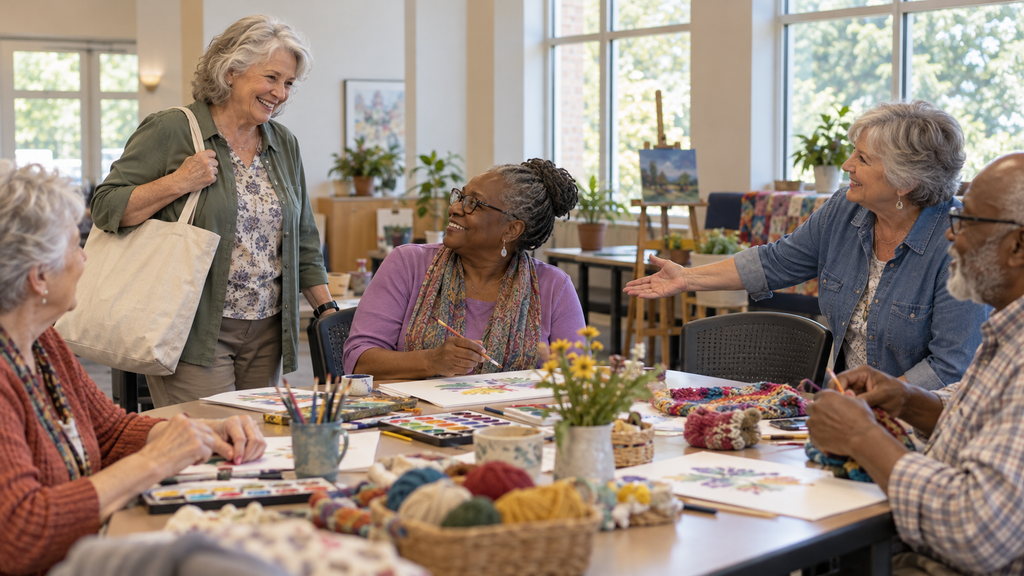
The Chapman Cultural Center serves as a central arts, humanities, and science hub for Greater Spartanburg. Its participating organizations and programming connect residents with visual art, theatre, dance, history, science, and other cultural experiences. The center also advertises classes covering areas from ballroom dancing and watercolors to theatre-related and science-based subjects, although current schedules, costs, and age eligibility should always be verified directly. chapmanculturalcenter.org
For someone new to Spartanburg, cultural involvement can take several forms:
- Attend a performance
- Enroll in a class
- Visit an exhibition
- Volunteer at an event
- Support a local artist
- Join an audience discussion
- Bring visiting family to a program
- Learn about the region through local history
- Move from spectator to participant
The last point matters.
It is easy to attend events anonymously. Belonging often begins when attendance becomes repetition—when you return often enough to recognize faces, learn names, and become expected.
A monthly class may build more connection than several isolated nights out because the same people gather around a shared interest.

College-Town Energy Is Not Only for College Students
Spartanburg’s colleges and educational institutions contribute ideas, performances, lectures, athletics, and community engagement to the region.
But prospective residents should not assume every campus opportunity is automatically open to the public. Availability, admission, registration, parking and eligibility vary by institution and program.
USC Upstate, for example, offers continuing-education and industry-certification programming designed for working professionals, career changers, employers and community members. Its official information describes both online and in-person options, while its broader community-engagement work emphasizes learning, belonging, wellness and collaboration. USC Upstate
A newcomer interested in lifelong learning might investigate:
- Noncredit courses
- Public lectures
- Performances
- Exhibitions
- Continuing professional education
- Community workshops
- Language learning
- Technology instruction
- Environmental education
- Writing groups
- Local-history programs
- Volunteer or mentoring partnerships
The goal does not need to be another credential.
Learning can provide structure, conversation, and the pleasure of becoming a beginner again.

Parks and Trails Can Become Part of an Ordinary Week
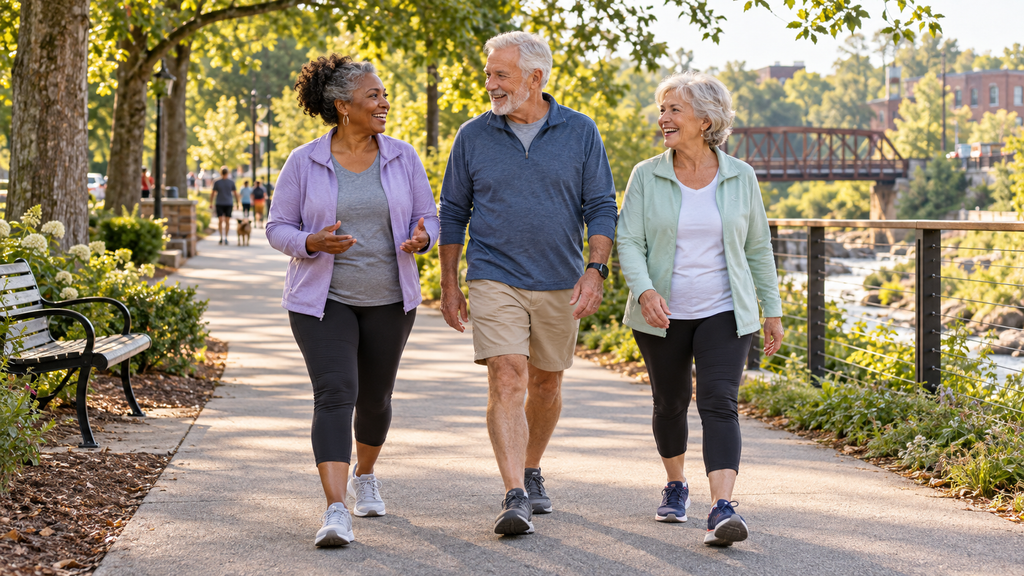
A trail is most valuable when it is close enough, comfortable enough, and appealing enough to use repeatedly.
Spartanburg’s trail and park system creates opportunities for walking, cycling, gathering, and outdoor recreation. The City of Spartanburg identifies more than twenty parks and playground spaces, while its trails include the Mary Black Rail Trail, Mary H. Wright Greenway and other routes. Spartanburg, SC
The Mary Black Rail Trail runs south of downtown and connects with nearby recreational facilities and businesses. The Mary H. Wright Greenway provides another neighborhood-connected route close to downtown and other parks. cityofspartanburg.org
Before choosing a home because it is “near a trail,” test what that means:
- How far is the nearest usable entrance?
- Is parking required?
- Is the surface comfortable?
- Are restrooms and seating available?
- Is shade adequate?
- Does the route feel safe and welcoming?
- Are road crossings manageable?
- Can you walk a distance that fits your ability?
- Would you use it alone?
- Are there groups or programs that make participation easier?
- Does the route connect to anything you value?
A five-minute drive to a trail you love may be more useful than a sidewalk outside your home that leads nowhere you want to go.
Spartanburg County Parks and Recreation also maintains parks, facilities, fitness programming, and activities identified for adults 50 and older. Program details change, so readers should consult the current schedule rather than relying on an older calendar. Spartanburg County Parks & Rec, SC
Community Centers Can Make Participation Feel Less Intimidating
A newcomer does not always need a major organization or formal club. Sometimes the easiest entry point is a community center with a class, walking track, pool, or recurring activity.
The City of Spartanburg’s Dr. T.K. Gregg Community Center includes indoor aquatics, a walking track, fitness facilities, and community rooms. The C.C. Woodson Community Center includes recreational facilities, gathering spaces, a learning center, a senior lounge, and a health-and-wellness space. Current access, membership, programming, and schedules should be confirmed directly. Dr. T.K. Gregg Community Center
When evaluating a community center, ask:
- Is the facility open to residents outside a particular neighborhood?
- Are memberships required?
- Which programs attract adults in your age and interest range?
- Are instructors prepared to accommodate different abilities?
- Is the building accessible?
- Is parking convenient?
- Are classes offered at times you would actually attend?
- Can you try a program before committing?
- Are there volunteer roles as well as participant roles?
The “best” program is often the one you can imagine attending on a rainy Wednesday when motivation is ordinary—not the one that sounds most impressive on paper.
Libraries Offer a Low-Pressure Way to Begin Belonging
Libraries are among the most useful landing places for newcomers because participation does not require an established social network.
A library can provide:
- Classes and workshops
- Book discussions
- Technology assistance
- Local-history resources
- Volunteer possibilities
- Quiet workspace
- Community information
- Creative programming
- Public events
- A familiar place to return
Spartanburg County Public Libraries develops programming for adults in addition to its collections and other services. Because calendars change, newcomers should review current programs at the branch nearest the address they are considering. spartanburglibraries.org
A library event may not seem like a major relocation factor. But a nearby institution offering recurring, approachable programs can become one of the first places where a new resident feels oriented.
Purpose Often Grows Faster Through Contribution Than Attendance
One of the most difficult parts of relocating later in life is losing the places where your usefulness was already understood.
In your previous community, people may have known whom to call when an event needed organizing, a neighbor needed help, a committee needed leadership, or a young person needed encouragement.
In a new place, that history is invisible.
Volunteering can help rebuild it.
The strongest volunteer match is not merely an organization with a need. It is a role that respects:
- Your skills
- Your energy
- Your available time
- Your physical comfort
- Your preferred level of responsibility
- The causes that matter to you
- Whether you enjoy working with people, systems, animals, art, nature or information
Potential directions include:
- Arts and cultural events
- Museums and local history
- Food assistance
- Mentoring
- Literacy
- Faith-based service
- Environmental work
- Animal welfare
- Healthcare support
- Community festivals
- Educational programs
- Neighborhood projects
- Boards and committees
Chapman Cultural Center, for example, identifies volunteer roles connected with special events. USC Upstate also maintains community-engagement efforts connecting learning and service, although individual opportunities and public eligibility must be confirmed. chapmanculturalcenter.org
Do not assume every volunteer experience will be the right fit. Try one role, pay attention to how it feels and adjust.
Purpose is more likely to grow where your contribution is useful, and your presence becomes known.

Friendship Usually Begins With Repetition
Adults relocating after 55 may be surrounded by friendly people and still feel lonely.
This is not necessarily evidence that the community is unwelcoming. Adult friendship often develops slowly because most people already have routines, obligations, and established relationships.
Connection becomes more likely when you choose activities with:
- The same participants
- A recurring schedule
- Shared work or learning
- Opportunities for conversation
- A manageable group size
- A reason to exchange contact information
- Natural follow-up outside the activity
Compare these two situations:
- Attending five unrelated festivals where you speak briefly with strangers
- Attending the same weekly class where you see twelve familiar people
Both can be enjoyable. The second is more likely to produce relationships.
When exploring Spartanburg, look for places where you can return—not only places you can visit.
Couples May Need Two Different Versions of Spartanburg
Relocation decisions often assume that a couple shares one lifestyle vision.
In reality, one person may imagine quiet mornings, gardening, and occasional outings. The other may want classes, performances, volunteering, and a fuller calendar.
One may feel comfortable driving across the county. The other may want most activities close to home. One may quickly approach new people; the other may need more structured introductions.
Before choosing a community, each person should separately answer:
- What gives my week purpose?
- How much social interaction do I want?
- Which activities would I continue without my partner?
- How far am I willing to drive alone?
- What do I want to learn?
- Where might I contribute?
- How much quiet do I need?
- Which shared experiences matter to us?
A successful next chapter does not require identical calendars. It requires a location that gives both people realistic access to lives they value.
If You Live Alone, Build Connection Into the Address Decision
Someone relocating alone may need to place greater weight on how naturally the home supports interaction.
That does not automatically mean choosing an apartment, condominium, or highly social community. Privacy may remain deeply important.
But evaluate:
- How easily you can leave the property
- Whether errands require long drives
- Whether activities are available at comfortable times
- How close trusted contacts would be
- Whether neighbors naturally encounter one another
- Whether the home demands isolating levels of maintenance
- Whether transportation alternatives exist
- Whether deliveries and services reach the address
- How you would build an emergency-contact network
- Where repeated social contact might develop
A beautiful home can provide privacy without providing connection. The decision should account for both.
Healthcare Access Supports the Life—but Should Not Define All of It
Healthcare matters when choosing a place after 55, but proximity to a hospital alone does not create well-being.
Consider:
- Primary care
- Specialists
- Pharmacy
- Rehabilitation
- Fitness and movement
- Mental-health resources
- Caregiver support
- Transportation
- Social connection
- Everyday opportunities that encourage you to leave the house
The Appalachian Council of Governments serves as the Area Agency on Aging for Spartanburg and five neighboring Upstate counties. Its services include information and assistance for older adults, people with disabilities, and caregivers, along with caregiver-support and long-term-care advocacy programs. www.scacog.org
These resources can help households understand available support. Eligibility, costs, waiting lists, and address-level availability should always be verified directly.
A good next chapter places appropriate care within reach while leaving plenty of room for the parts of life that are not appointments.
Evaluate Transportation While You Still Have Choices
If every activity requires driving, the home’s long-term fit depends heavily on continued access to a vehicle.
Before buying, test routes to:
- Healthcare
- Groceries
- Parks
- Cultural venues
- Classes
- Faith communities
- Volunteer work
- Friends and family
- Downtown
- The library
- Community centers
Ask:
- Would I make this drive at night?
- Is the route comfortable during rain?
- Can I avoid high-speed roads if I prefer?
- Is parking close to the destination?
- Are ride services reliable at this address?
- Is public transportation useful for any part of my routine?
- Could I continue participating if I temporarily could not drive?
A home does not need to be walkable to everything. But the transportation required to reach your life should remain acceptable.

Build a “Something to Look Forward To” Test
When comparing Spartanburg-area communities, create a sample month.
Place real possibilities on a blank calendar:
- One movement or wellness activity each week
- One class, lecture, or creative activity
- One volunteer commitment
- One cultural event
- One outdoor experience
- One recurring social gathering
- One open day with no obligation
- One activity you would do independently
- One activity you would share with family or a partner
Then ask:
- Where would each activity happen?
- How long would it take to get there?
- What would it cost?
- Is it offered regularly?
- Is it open to me?
- Would I truly attend?
- Does the calendar feel energizing or exhausting?
This exercise turns “Spartanburg has plenty to do” into a more useful question: Does Spartanburg make it realistic for me to do the things that matter?
Try Participation Before Choosing the Property
If possible, attend several activities before committing to a neighborhood.
Do not limit the visit to major attractions.
Try:
- A weekday walk
- A library program
- A community-center visit
- A local performance
- A class
- A volunteer orientation
- A faith-community gathering
- A neighborhood restaurant at an ordinary hour
- A public meeting
- A casual downtown afternoon
Notice how participation feels.
Were you comfortable entering alone? Did anyone speak with you? Was parking manageable? Did the activity attract people with shared interests? Would you return without being prompted?
If you remain unsure, a rent-first period can provide time to build routines before choosing a permanent address.
Related reading: Rent First, Learn the City: When a One-Year Lease Can Be a Smart Upstate Relocation Strategy
The Right Home Should Make Your Life Easier to Reach
A home can be beautifully designed and financially comfortable yet still place the life you want too far away.
After 55, housing and engagement should be evaluated together.
The right Spartanburg-area home might make it easier to:
- Walk regularly
- Attend performances
- Volunteer
- Reach healthcare
- Continue learning
- Meet a friend for lunch
- Host family
- Participate in faith or civic life
- Try something new
- Rest when you want to
The purpose is not to live near the greatest number of amenities.
It is to live within realistic reach of the experiences that give your week meaning.

Your Next Step: Plan One Good Ordinary Week
Before deciding where to live, write down what a satisfying—but not exhausting—ordinary week would include.
Choose:
- One activity that keeps you moving
- One place where you could see familiar people
- One subject or skill you would enjoy learning
- One way you could contribute
- One experience you and a partner, friend, or family member could share
- Enough unscheduled time to enjoy your home
Then investigate where those opportunities exist, how frequently they are offered, and whether the address you are considering makes participation realistic.
The next chapter does not need to be constantly busy.
It needs enough connection, purpose and possibility that you wake up with something worth anticipating.
Finding Your Place
The right move begins with the right questions. Explore the communities, practical guidance and local research that can help you choose with greater confidence.
Editorial Production Note
This story was developed by the Greenville Upstate Life Media Editorial Team with assistance from Lila Green, our AI-assisted aging, healthcare, housing and financial-wellness editorial persona, and Georgia Wren, our AI-assisted relocation and community-integration editorial persona. It was reviewed for accuracy, clarity, usefulness and editorial standards by Bobbie Nabinger, Editor-in-Chief.
AI Image Disclosure
Unless otherwise identified or credited, the images accompanying this article are AI-assisted editorial illustrations created for Greenville Upstate Life Media to represent the setting, atmosphere and themes of the featured story. They are not documentary photographs of the actual people, businesses, organizations, locations, events or activities described.
Sources and Further Reading
- City of Spartanburg Parks and Recreation
- City of Spartanburg Parks
- City of Spartanburg Trails and Cycling
- Mary Black Rail Trail
- Mary H. Wright Greenway
- Spartanburg County Parks and Recreation
- Dr. T.K. Gregg Community Center
- C.C. Woodson Community Center
- Chapman Cultural Center
- Chapman Cultural Center Classes
- USC Upstate Continuing Education
- USC Upstate Community Engagement
- Spartanburg County Public Libraries
- Appalachian Council of Governments Aging Services
- Appalachian Council of Governments Information and Referral
This article provides general relocation, lifestyle and community information. It is not medical, legal, financial, tax, transportation, real-estate or healthcare advice. Readers should confirm current programs, accessibility, eligibility, costs, schedules and services directly with the responsible organizations and appropriately qualified professionals.