

By Greenville Upstate Life Editorial Team
On a Saturday morning in Fountain Inn, a shopping list can become something more.
You may arrive looking for tomatoes, local honey, a loaf of bread, or something handmade for the house. Then a farmer tells you what is growing especially well. A baker remembers what you bought the week before. Someone points you toward a downtown restaurant you have not tried. Two neighbors stop to talk, a child studies a table filled with vegetables, and a newcomer begins to feel a little less new.
That is the quiet magic of a community market. Food may bring people through the entrance, but it is often the conversations between the tables that give the morning its meaning.
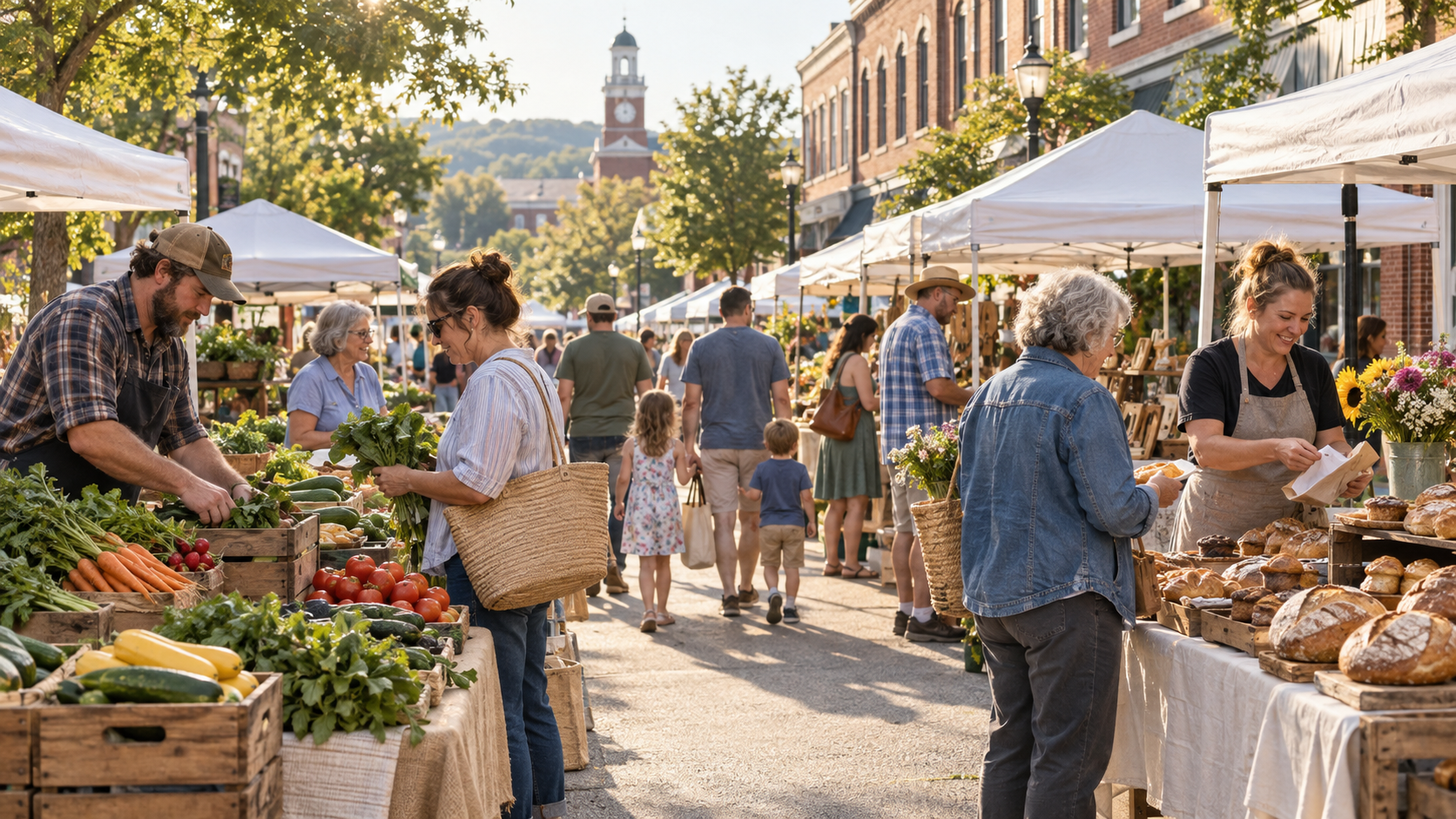
The Fountain Inn Farmers Market sits in the heart of downtown at 110 Depot Street. During its announced market season, Saturday mornings bring together local farms, food producers, bakers, artisans, small businesses, families, and visitors. It is a place to buy what the Upstate grows and makes—but it is also a place to see how Fountain Inn connects.
And when recovery support becomes part of that public gathering, the market reveals something even deeper: a community can make room not only for local commerce and good food, but also for hope, dignity, and the human need to belong.
Where Shopping Becomes a Saturday Tradition
There is something refreshingly direct about shopping at a farmers market.
The person standing behind the table may have planted the seeds, tended the animals, harvested the mushrooms, gathered the honey, mixed the dough, or made the object you are holding. Instead of choosing something from an anonymous shelf, you have an opportunity to meet the work—and often the person—behind it.
That changes the transaction.
A question about a vegetable can become a conversation about the growing season. A loaf of bread can lead to a recommendation for Sunday breakfast. A jar of seasoning may come with the story of how a recipe was developed. Even a quick purchase can leave the buyer with a stronger sense of where the food came from and who helped bring it to the table.
Main Street Fountain Inn describes its farmers market as a Saturday tradition centered on community, connection, seasonal goods, handcrafted products, and support for small businesses. That description gets to the heart of the experience: the market is not simply an outdoor grocery stop. It is part of the rhythm of downtown life.
For people who already live nearby, that rhythm can become familiar and comforting. For someone researching a move to Fountain Inn, it offers a revealing glimpse of ordinary community life—the kind that cannot be captured by housing numbers or a map alone.
The People Behind the Market Tables
A farmers market takes shape through the people who return to it.
The market’s published 2026 roster has included farms and food producers such as JBW Farms Homestead, Satterfield Cattle Co., Sweet Wells Farm, Hyder Farms, Barefoot Acres, The Southern Mushroom, and Vdovichenko Bee Farm. Bakers, prepared-food businesses, artists, and makers have also been represented, including Rolling Scones Bakery, Twine n’ Glass Creatives, ColorFun Studio, Spears Acres, ButterBath.com, Crumbl, and Sully’s Steamers.
Participation can vary from week to week, which is part of the nature of a seasonal market. A harvest changes. A product sells out. Weather alters a farm’s schedule. New makers appear, and familiar vendors return with something different.
That variety gives visitors a reason to slow down.
You are not merely scanning a row of products. You are moving through a collection of local stories: a farm finding customers, a baker building a following, an artisan testing a new idea, or a family business becoming part of someone else’s Saturday routine.
These small exchanges matter because local businesses are built through relationships as much as transactions. A shopper who learns a farmer’s name may return the following week. A visitor who tastes something memorable may recommend it to a neighbor. A newcomer who discovers one local producer may begin to explore the restaurants, shops, and community events surrounding the market.
Over time, those moments form a network of familiarity.
How a Farmers Market Feeds More Than One Meal
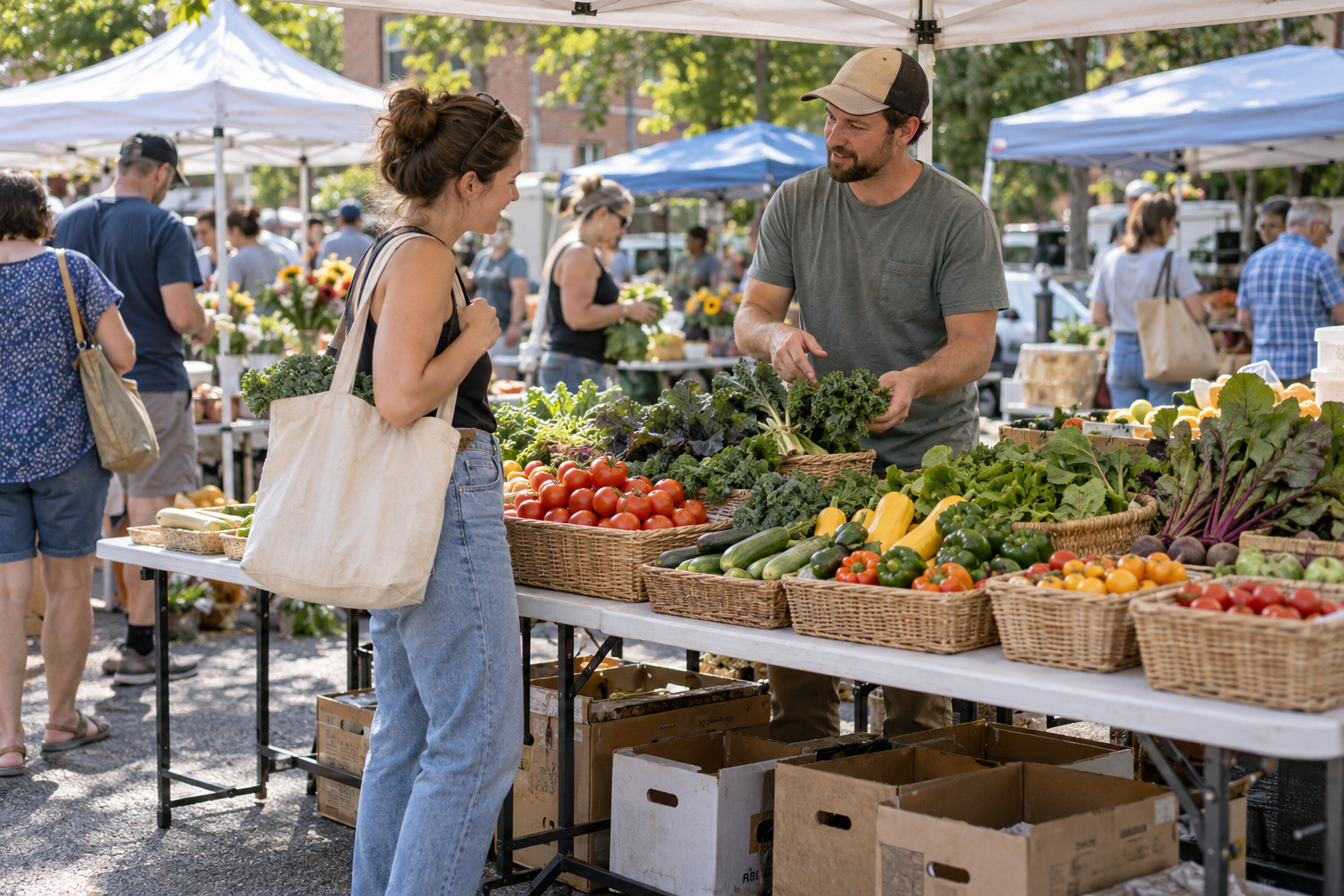
A bag of market vegetables may become dinner. Local mushrooms may find their way into a weekend recipe. Honey may sit on a kitchen shelf for months. Bread bought in the morning may be shared around a table that afternoon.
But the market’s influence can travel further than the food itself.
Money spent with a local producer supports the people who plant, raise, bake, build, and create in the region. Those vendors may purchase supplies from other local businesses, recommend neighboring shops, collaborate with restaurants, or introduce customers to other Upstate producers.
The result is a community food system made visible in one walkable place.
For residents, that visibility makes local food feel approachable. You do not need to understand agricultural cycles or know every farm in the region. You can begin with a question:
What is especially good this week?
That simple question can turn shopping into discovery. It gives the producer an opportunity to share knowledge and gives the shopper a more personal relationship with the food going home.
For newcomers, this may be one of the easiest ways to begin understanding the Upstate. Food opens conversations naturally. It carries family traditions, seasonal habits, business stories, and memories of place. One visit can introduce a person to flavors and producers they might otherwise never encounter.
That is why a farmers market can feed more than one meal. It feeds curiosity, familiarity, and a growing sense of local connection.
How the Market and Main Street Strengthen Each Other
The setting matters.
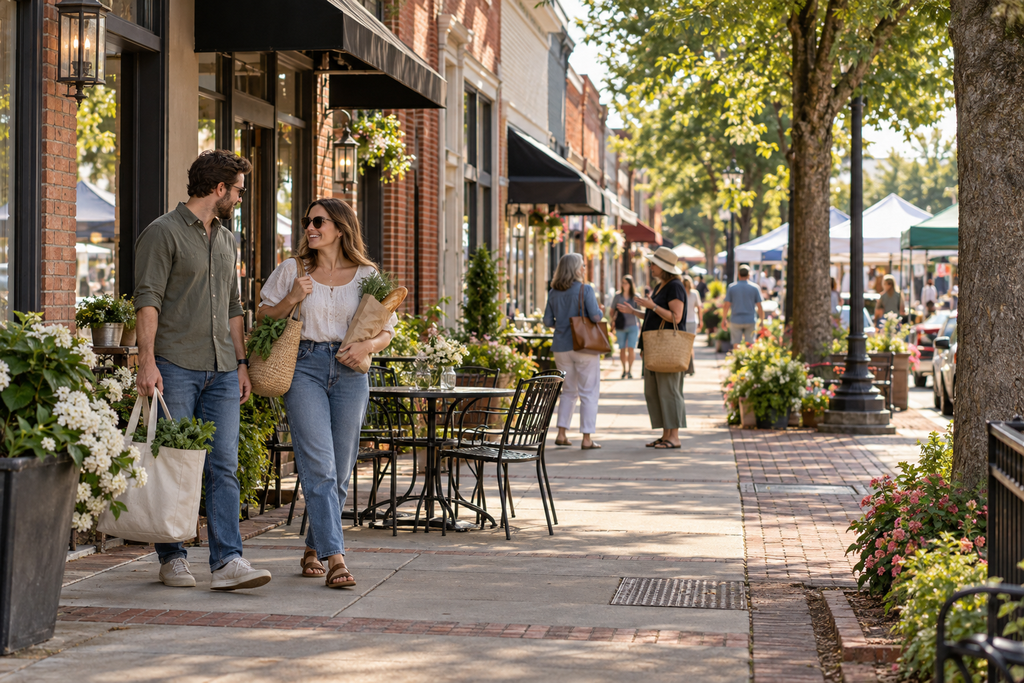
Because the Fountain Inn Farmers Market is held downtown, a market visit can become part of a larger morning. Someone who arrives for produce may stay for coffee. A family may walk along Main Street, visit a shop, or make plans to return for lunch. A visitor drawn by one community event may discover businesses that become future favorites.
The relationship also works in the other direction. Restaurants, shops, public spaces, and historic buildings give the market a recognizable setting. Instead of feeling like an isolated event, it becomes part of Fountain Inn’s broader downtown identity.
This kind of activity helps make a downtown feel lived in.
A strong Main Street is not defined only by its buildings. It is defined by what happens among them: conversations on sidewalks, familiar faces behind counters, public celebrations, children discovering something new, and residents choosing to spend part of their day close to home.
The farmers market contributes to that atmosphere by giving people a recurring reason to gather. It brings local production into public view while helping residents and visitors experience downtown at a more personal pace.
The market supports Main Street, and Main Street gives the market a home.
What Newcomers Can Learn in One Morning
Relocation research often begins with measurable facts: home prices, commute times, taxes, schools, utilities, and access to services. Those questions matter. They help people determine whether a move is practical.
But they do not always answer the question beneath the question:
What might it feel like to live here?
A community market cannot answer that completely, either. One Saturday morning should never be treated as a final verdict on an entire city. But it can provide clues.
Notice how people use the space. Do they stop to talk, or hurry through? Are different generations represented? Do vendors appear to know their customers? Do local organizations participate in public events? Is it easy to move from the market into the surrounding downtown? Does the morning feel welcoming to someone who has never been there before?
These observations help turn relocation research into a picture of ordinary life.
A newcomer can also participate instead of merely watching. Ask a vendor where else local products are sold. Ask someone which downtown restaurant they would recommend. Learn about another community event. Return a second time and see whether the experience feels different when one or two faces have become familiar.
Belonging rarely arrives all at once. More often, it begins through repetition: the second visit, the remembered name, the shopkeeper who recognizes you, or the moment you can give directions to someone newer than you are.
A farmers market creates room for those small beginnings.
When Recovery Becomes Part of the Public Square
The Fountain Inn market story also intersects with a more vulnerable—and deeply important—form of community connection.
FAVOR Upstate’s official calendar lists a Fountain Inn National Recovery Month Celebration on Saturday, September 26, 2026, from 8:00 a.m. to noon. The gathering brings recovery awareness into a familiar community setting rather than separating it from everyday public life.
That visibility matters.
Recovery from substance use can be accompanied by isolation, fear of judgment, and uncertainty about where support can be found. Families and friends may carry their own questions, worry, or grief. When recovery organizations participate openly in community life, they create an opportunity for people to encounter support without having to cross an intimidating threshold.
Someone may come because of the market and learn that help exists. Another person may attend specifically to celebrate recovery and find themselves surrounded by the ordinary pleasures of a Saturday morning—food, music, conversation, families, and neighbors. Others may simply witness recovery being treated with respect.
No one needs to disclose a personal story to understand the message: people in recovery are part of the community, and support belongs where community life happens.
Inspired to experience this community celebration for yourself? Read our September 26 Fountain Inn event spotlight to discover what’s planned, then check with FAVOR Upstate for the latest event-day updates before heading out.
Why Recovery Visibility Matters
Community support becomes more approachable when people can see it.
An organization’s name on a resource list is useful, but a welcoming public presence can make that organization feel real. People can ask a question, take information for someone else, or learn what support looks like without making a formal commitment.
FAVOR Upstate’s current calendar also lists All Recovery meetings at the Fountain Inn Activities Center. Because meeting schedules can change, anyone interested in attending should confirm the current location and time through FAVOR Upstate.
The existence of those meetings sends an important signal: recovery support is not limited to a single annual celebration. It can be part of the community’s ongoing network of care.
For people considering a move, this may reveal something meaningful about Fountain Inn. A community is not defined only by how it celebrates success. It is also defined by how it responds when people need encouragement, connection, and another chance.
Bringing recovery awareness into a visible public setting does not diminish the farmers’ market experience. It expands what the gathering can hold.
There is still produce to choose, bread to carry home, and something handmade waiting to be discovered. There is also room for hope.

A Market Is a Map of Community Relationships
Look closely at a farmers market, and you begin to see connections extending in every direction.
A farmer supplies a family’s table. A baker introduces a customer to a local ingredient. A maker recommends another vendor. A downtown business benefits from increased foot traffic. A community organization meets someone who needs information. A visitor discovers a neighborhood. A newcomer begins to recognize the people who shape the place.
The market becomes a map—not of roads, but of relationships.
That is particularly valuable in a growing community. As new residents arrive, public gathering places help preserve a sense of connection. They give longtime residents and newcomers a shared experience that does not require an invitation. You can simply arrive, look around, ask a question, and participate at your own pace.
Markets also provide an accessible stage for small businesses. Not every producer begins with a storefront. Not every maker needs one. A market table can become a place to introduce a product, hear directly from customers, refine an idea, and build the relationships that allow a small enterprise to grow.
Those relationships make local commerce feel human.
A purchase becomes encouragement. A recommendation becomes momentum. A familiar customer becomes part of a business’s story.
The Hidden Gem Is What Happens Between the Tables
Calling the Fountain Inn Farmers Market a Hidden Gem does not mean it must be unknown.
The hidden part is what a hurried visitor might miss.
It is the conversation about how something was grown. It is the pride behind a handmade object. It is the exchange of recommendations among people who care about the same town. It is the recovery advocate offering a welcoming point of connection. It is the newcomer realizing that finding a place to live and finding a place within a community are not exactly the same thing.
The market helps bridge that distance.
It offers a low-pressure way to participate in Fountain Inn life. You do not need an established circle of friends. You do not need to know the right person or understand every local tradition. You can begin by showing up.
Buy something that was grown nearby. Ask a question. Walk downtown. Notice who gathers there. Return when the market is held again.
The richest part of the experience may not fit inside your shopping bag. It may be the first small feeling that this is a place where you could know people—and eventually be known.

Experience the Market—and Look Beyond the Shopping Bag
The Fountain Inn Farmers Market is seasonal, and schedules, vendors, and special programming can change. Before planning a visit, check the official Fountain Inn Farmers Market page for the current season, operating hours, parking information, and vendor updates.
Once you arrive, give yourself permission to wander.
Come for vegetables, mushrooms, honey, meat, bread, seasonings, art, or something you did not know you wanted until you saw it. Stay long enough to meet one of the people behind the tables. Then walk beyond the market and experience more of downtown Fountain Inn.
If the September 26 recovery celebration is part of your plans, review the latest information on the FAVOR Upstate events calendar before attending.
A market morning does not tell you everything about a community. But it can show you something that matters: how people make room for one another through food, enterprise, conversation, and care.
Sometimes that is where feeling at home begins.
Meet the Market Beyond the Shopping List
Before visiting, check the official market page for current dates, hours, and vendor information. Once you arrive, choose one table and begin a conversation. Ask a farmer what is growing well, discover the story behind something handmade, or introduce yourself to a local baker.
The most memorable thing you take home may be the beginning of a familiar face.
Plan Your Fountain Inn Market Visit
Find Your Place
Feeling at home begins with discovering the people, places, and traditions that give a community its character. Explore more of the Upstate—and begin finding your place within it.
Editorial production note: This story was developed by the Greenville Upstate Life Media editorial team with assistance from Sierra Blake, our AI-assisted community-life editorial persona, and Jamal Torres, our AI-assisted food-and-culture editorial persona. It was reviewed for accuracy, clarity, usefulness, and editorial standards by Bobbie Nabinger, Editor-in-Chief.
Sources and Further Reading
- Fountain Inn Farmers Market — Main Street Fountain Inn
- FAVOR Upstate Events Calendar
- City of Fountain Inn